
I was just a child in fifth grade when I realized I had to “escape” from Nepal. My decision wasn’t born of a mere whim; it was a survival instinct. I decided I had to go to the USA for my studies to become more than what the casteist (and sexist) society of Nepal said I could be.
Even as a pre-pubescent child, I had already experienced enough discrimination to know that Nepali society was not for the likes of me. I remember the sting of being called “Fohori Bhote” (“Filthy Bhote“, where Bhote is the Nepali term for “ethnic Tibetan” but carries negative connotations), and the crushing isolation of the fourth grade, when I was ostracized by my own classmates. When I applied for the United World College (UWC) scholarship years later, I stated my reason plainly: “[A] strong desire to learn more about the world and the people who live on it.”
Luckily, I managed that escape. I left as a teenager to attend the UWC of the Adriatic in Italy. What I didn’t realize then was how transformative living, working, and traveling across different cultures would be. I had no idea how much the world would mold me.
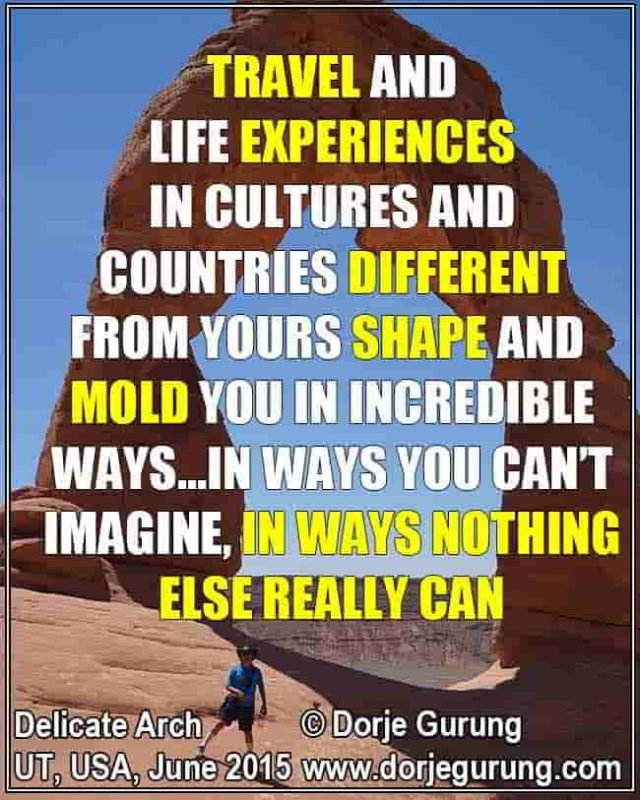
Over the next twenty-five years, I studied in four countries (Italy, the USA, the UK, and Australia), lived and worked in ten (such as Norway, Malawi, Vietnam, and Qatar), and traveled through thirty others. I taught and befriended people from dozens of cultures, a number of different religions, and also of different sexuality from mine.
The most profound way these experiences transformed me was by instilling a “humanity-first” perspective. I realized that my ethnicity and nationality were secondary to my primary identity as a human being. By de-centering my own labels, I began to view every individual I encountered as a human being first. I had transcended not only the physical and cultural bounds of my upbringing but also the emotional and intellectual constraints that once defined my world.
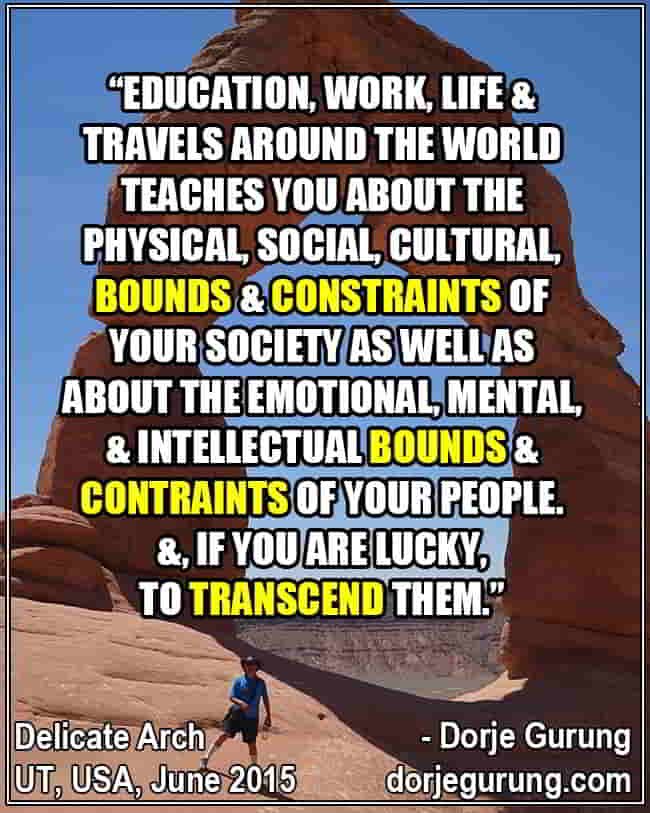
Returning to Nepal in 2013, I looked at my home through a different lens. I studied the society intently—reading, observing, and listening. I saw a culture that remains traditional and inward-looking, educating its people to place an inordinate amount of pride in things external to them: the flag, the history books, and the religious dogma of Hinduism.
I felt the weight of this personally. I saw how the education system—the same one that failed to protect me as a child—still fails to impart critical thinking. Instead of teaching children to question, it maintains a status quo that values social status and caste over individual worth. When I see that over 90% of the population still lacks tertiary education, I don’t just see a statistic; I see millions of minds being discouraged from thinking critically, just as I was.
As my understanding grew, I realized how fortunate I was to have left. I also made a scary discovery.
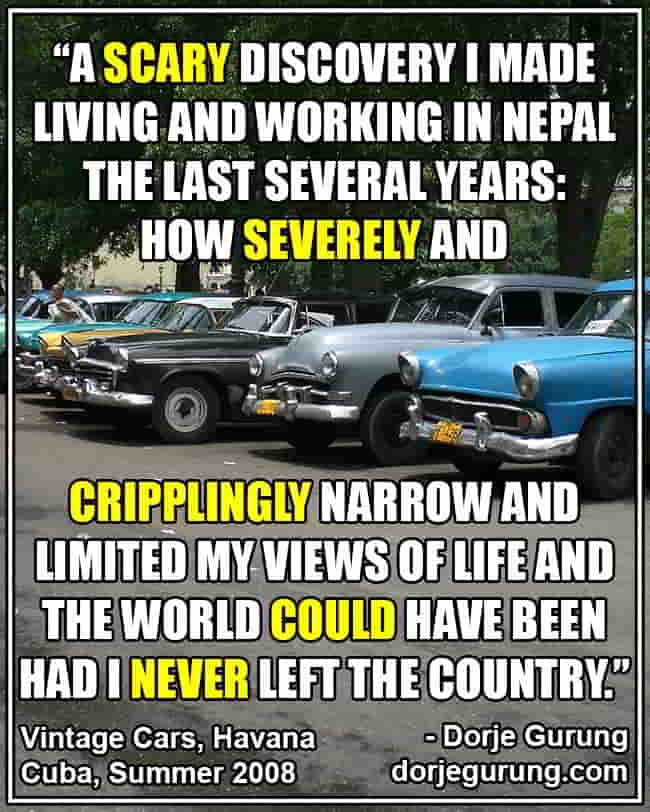
If I had not left, I might have stayed trapped in that narrow lens, perhaps even internalizing the very biases used against me. Sadly, in Nepal, it seems one must have considerable experience beyond its borders to rise above what this insular society instills. In order for us to grow as a society—to display true kindness and empathy toward one another—we must be able to view the world through a much bigger lens. That is the perspective that travel forces upon you. It reminds you that before you are a caste, a gender, or a nationality, you are a human being.
What do you think?
PS. This blog post is an extended version of a Jan. 5 Instagram post. Additionally, I got help from Google’s AI Gemini composing it.
