
Dorje Gurung

Dorje Gurung

How to Fight Legacies of Monarchy-Entrenched Structural Discrimination And Systemic Casteism For a More Just And Equitable Nepal
monarchy discrimination casteism legacy featimage

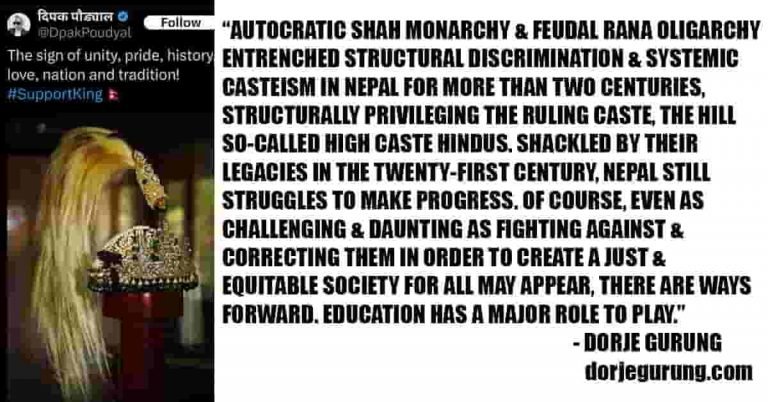
Autocratic Shah monarchy and feudal Rana oligarchy entrenched structural discrimination and systemic casteism in Nepal for more than two centuries, structurally privileging the ruling caste, the hill so-called high caste Hindus. Shackled by their legacies in the twenty-first century, Nepal still struggles to make progress. But, even as challenging and daunting as fighting against and correcting them in order to create a just and equitable Nepali society for all may appear, there are ways forward. Education has a major role to play.

In a three-post blog series, I am reproducing the answers Grok 3 provided on the subject. This one--the third and final one in the series--details the way forward.
Legacies of Shah Monarchy’s Structural Discrimination And Systemic Casteism in Nepal

monarchy discrimination casteism legacy featimage

Autocratic Shah monarchy and feudal Rana oligarchy entrenched structural discrimination and systemic casteism in Nepal for more than two centuries, structurally privileging the ruling caste, the hill so-called high caste Hindus. Shackled by their legacies in the twenty-first century, Nepal still struggles to make progress. But, even as challenging and daunting as fighting against and correcting them in order to create a just and equitable Nepali society for all may appear, there are ways forward. Education has a major role to play.

In a three-post blog series, I am reproducing the answers Grok 3 provided on the subject. This one--the second one in the series--details the legacies of the deliberately instituted structural discrimination and systemic casteism.

Nepal’s Shah Monarchy DELIBERATELY Entrenched Structural Discrimination And Systemic Casteism

monarchy discrimination casteism legacy featimage

Autocratic Shah monarchy and feudal Rana oligarchy entrenched structural discrimination and systemic casteism in Nepal for more than two centuries, structurally privileging the ruling caste, the hill so-called high caste Hindus. Shackled by their legacies in the twenty-first century, Nepal still struggles to make progress. But, even as challenging and daunting as fighting against and correcting them in order to create a just and equitable Nepali society for all may appear, there are ways forward. Education has a major role to play.

In this first of a three-post blog series, I am reproducing the answers Grok 3 provided on the subject. This one details how all that happened and/or how they were all deliberately instituted.

Only in Nepal: Forget Acknowledge an Issue, Deny Its Existence, Make Talking About It Taboo, AND Associate Stigma With It

nothing can be changed until faced featimage

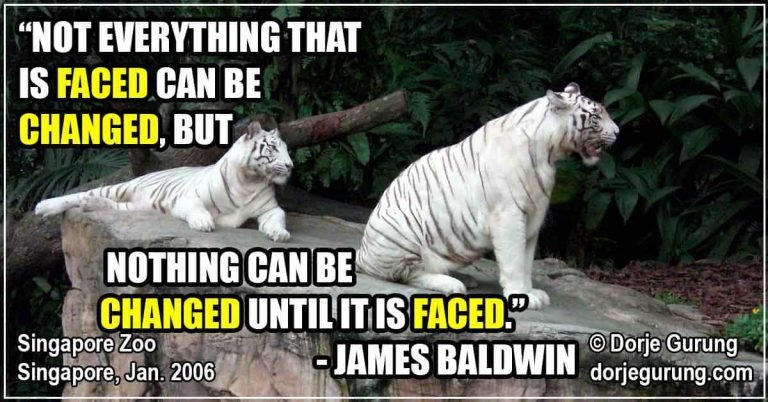
It's virtually impossible to address a social ill without the society first acknowledging it for what it is. When the education system does NOT do that, what chance is there at all of there even being a discourse about it, forget take steps to address it?! That is the situation with the caste system in Nepal.