Tag systemic casteism

The 2026 Mirage: Why Nepal’s Upcoming Elections Won’t Break the 250-Year Cycle

nepal is going nowhere featimage

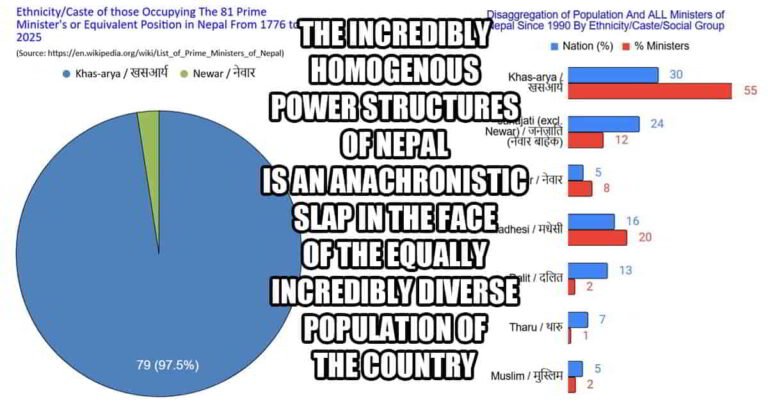
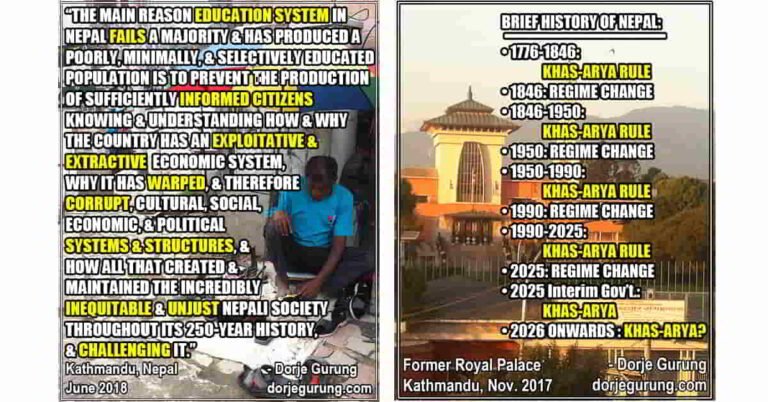
Throughout Nepal’s 250-year history, the nation has endured a persistent internal colonization by the Khas-Arya—specifically, Khas-Arya men. This hierarchy remained immutable even after the hereditary monarchy was toppled in 1990; the Khas-Arya elite simply metamorphosed from royal subjects into democratic hegemonists. The upcoming March 2026 elections fail to signal a departure from this legacy. By orchestrating a selectively educated populace, the ruling caste has ensured that the mechanisms of their power remain both unchallenged and, for many, invisible.

Read MoreThe 2026 Mirage: Why Nepal’s Upcoming Elections Won’t Break the 250-Year Cycle

A Legacy of Structural Discrimination And Systemic Casteism: The Nepal Army

population vs COAS featimage

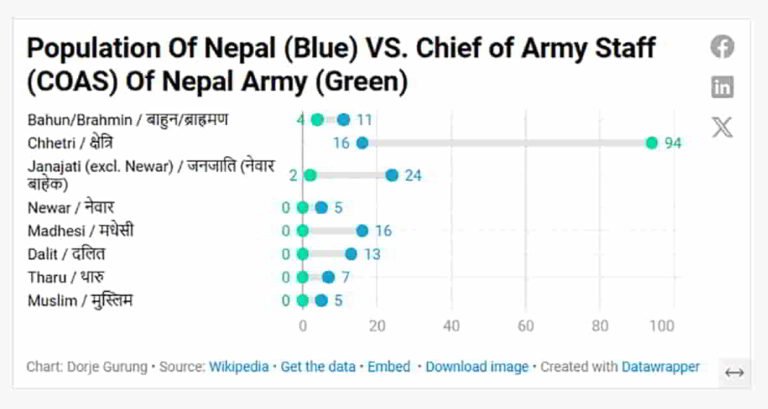
The entire history of Nepal is characterized by structural discrimination and systemic casteism, initiated by Prithvi Narayan Shah, the founder of the country. Evidence of these structures—from the highest levels of federal government to the smallest local offices—abounds, if you care to look. The Nepal Army, the institution responsible for the nation’s safety and security, is just one example. A disproportionately high percentage of those who head the institution are hill so-called 'high-caste' Hindu men.

Read MoreA Legacy of Structural Discrimination And Systemic Casteism: The Nepal Army

How to Fight Legacies of Monarchy-Entrenched Structural Discrimination And Systemic Casteism For a More Just And Equitable Nepal

monarchy discrimination casteism legacy featimage

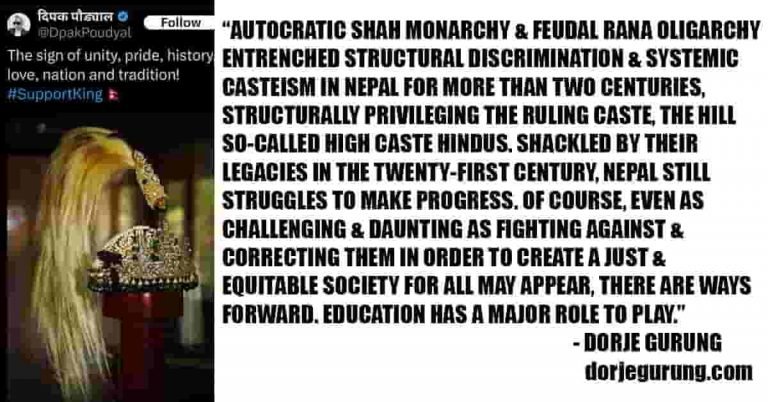
Autocratic Shah monarchy and feudal Rana oligarchy entrenched structural discrimination and systemic casteism in Nepal for more than two centuries, structurally privileging the ruling caste, the hill so-called high caste Hindus. Shackled by their legacies in the twenty-first century, Nepal still struggles to make progress. But, even as challenging and daunting as fighting against and correcting them in order to create a just and equitable Nepali society for all may appear, there are ways forward. Education has a major role to play.

In a three-post blog series, I am reproducing the answers Grok 3 provided on the subject. This one--the third and final one in the series--details the way forward.

Read MoreHow to Fight Legacies of Monarchy-Entrenched Structural Discrimination And Systemic Casteism For a More Just And Equitable Nepal

Legacies of Shah Monarchy’s Structural Discrimination And Systemic Casteism in Nepal

monarchy discrimination casteism legacy featimage

Autocratic Shah monarchy and feudal Rana oligarchy entrenched structural discrimination and systemic casteism in Nepal for more than two centuries, structurally privileging the ruling caste, the hill so-called high caste Hindus. Shackled by their legacies in the twenty-first century, Nepal still struggles to make progress. But, even as challenging and daunting as fighting against and correcting them in order to create a just and equitable Nepali society for all may appear, there are ways forward. Education has a major role to play.

In a three-post blog series, I am reproducing the answers Grok 3 provided on the subject. This one--the second one in the series--details the legacies of the deliberately instituted structural discrimination and systemic casteism.

Read MoreLegacies of Shah Monarchy’s Structural Discrimination And Systemic Casteism in Nepal

Nepal’s Shah Monarchy DELIBERATELY Entrenched Structural Discrimination And Systemic Casteism

monarchy discrimination casteism legacy featimage

Autocratic Shah monarchy and feudal Rana oligarchy entrenched structural discrimination and systemic casteism in Nepal for more than two centuries, structurally privileging the ruling caste, the hill so-called high caste Hindus. Shackled by their legacies in the twenty-first century, Nepal still struggles to make progress. But, even as challenging and daunting as fighting against and correcting them in order to create a just and equitable Nepali society for all may appear, there are ways forward. Education has a major role to play.

In this first of a three-post blog series, I am reproducing the answers Grok 3 provided on the subject. This one details how all that happened and/or how they were all deliberately instituted.

Read MoreNepal’s Shah Monarchy DELIBERATELY Entrenched Structural Discrimination And Systemic Casteism