Nepali Voters, Old Khas-arya Male Politicians, and Statistics
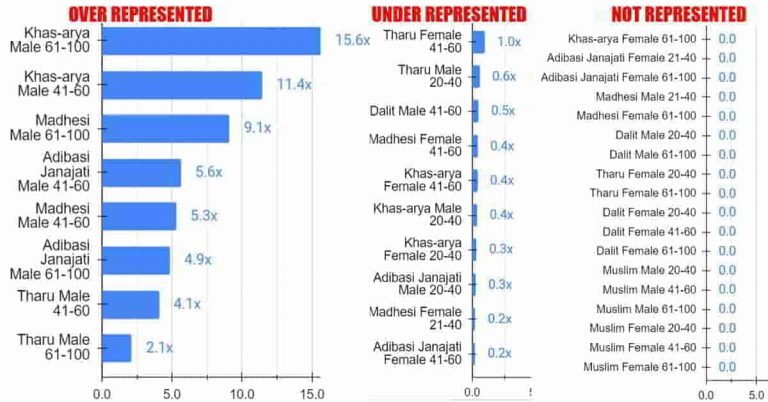
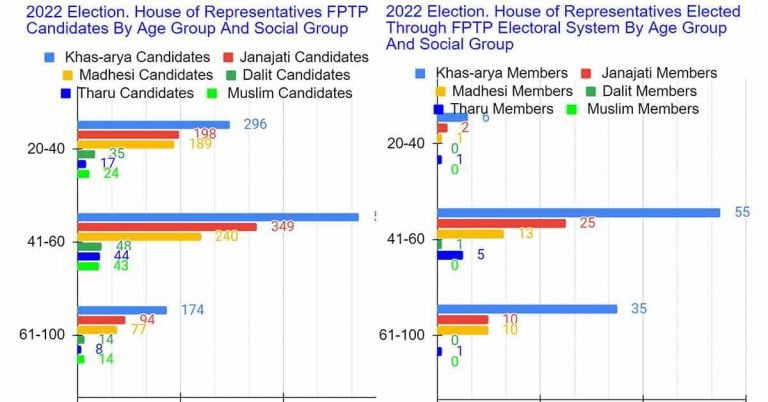
So, how does one explain the warped results of the 2022 election for the 165 FPTP members of House of Representatives?
Some can be explianed by statistics.
So, how does one explain the warped results of the 2022 election for the 165 FPTP members of House of Representatives?
Some can be explianed by statistics.
Analysis of Nepal's 2022 Election data for the House of Representatives seem to indicate that Nepali voters prefer their politicians to be old Khas-arya men. How and is that really the case? This is the first in a series of blog post on the subject.
I am NOT surprised by the fact that so many of the systems in Nepal are so thoroughly corrupt. Reason? Select ethnic/caste groups(s) monopolizing State structures continuously for centuries, as had been the case in this country, is itself one of the root causes -- if not THE root cause -- as well as evidence of corruption.
The judiciary is no exception.
A primary school poetry textbook contains 108 poems by 66 poets representing only 44 surnames. All but three were male poets. A vast majority (88%) of the poets were Bahun/Brahmin, hill so-called high Hindu, men who make up 6% of the population. And that's not even the worst.
Regardless, that makes one wonder, among other things, what the accomplishment of seventy or so years of education for the public has been. Who has the State been educating?
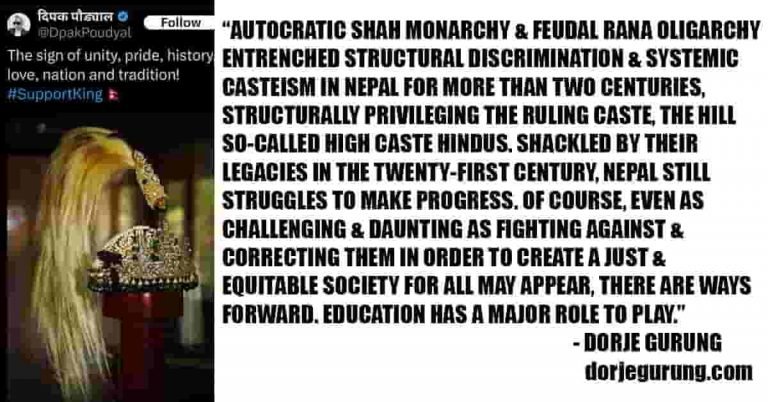
One of the many legacies of the long casteist history of the country is the major structural issues Nepal continues to face. Evidences abound! But I keep coming across hill so-called High caste Hindus who can't see or refuse to see the evidences for what they are.
This is about one such man, a professor at a medical college no less!