Education The Gatekeeper
Following the toppling of Khadga Prasad Sharma Oli’s government by the Generation Z protests in early September 2025, Nepal is preparing for elections. The biggest issue facing Nepal is poorly, minimally, and selectively educated population. Less than 10% of 25 to 64 year-olds have tertiary education. (World average is 28.)
New Nepal: Break the Chain, Make Education Everything
One of the main reasons for this poverty is the deliberately suppressed and low level of education among the population.
The New Nepal must have a representative government and prioritize education above all else if it hopes to make progress.
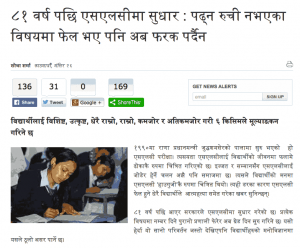
A Lesson From Nepal: How to Fail Your Students Part I
What's more, analyzing the chemistry paper, it had some major issues. The whole exercise, as far as I am concerned, has amounted to putting the students through a wringer.
A Lesson From Nepal: How to Fail Your Students Part II
What is Nepal Election Really About?
The chances of the the March elections bringing about change is minimal.
The 2026 Mirage: Why Nepal’s Upcoming Elections Won’t Break the 250-Year Cycle
See below for an extensive data analysis of the 2022 elections.
Structural Issues and Social Justice
After poor, minimal, and selective education of the population, the other devastating consequence of the internal colonization of Nepal by the hill so-called high caste Hindus for the country’s entire 250-year history is the major structural issues the countries suffer from. How did it all start and how was it institutionalized and entrenched? It was initiated by Prithvi Narayan Shah and institutionalized and entrenched by his posterity. Of course, there are ways to fight against it and correct it.
Nepal’s Shah Monarchy DELIBERATELY Entrenched Structural Discrimination And Systemic Casteism
In this first of a three-post blog series, I am reproducing the answers Grok 3 provided on the subject. This one details how all that happened and/or how they were all deliberately instituted.
Legacies of Shah Monarchy’s Structural Discrimination And Systemic Casteism in Nepal
In a three-post blog series, I am reproducing the answers Grok 3 provided on the subject. This one--the second one in the series--details the legacies of the deliberately instituted structural discrimination and systemic casteism.
How to Fight Legacies of Monarchy-Entrenched Structural Discrimination And Systemic Casteism For a More Just And Equitable Nepal
In a three-post blog series, I am reproducing the answers Grok 3 provided on the subject. This one--the third and final one in the series--details the way forward.
See below for more on the corrupt legacies of the 250-year long history of structural discrimination and systemic casteism in Nepal.
A Legacy of Structural Discrimination And Systemic Casteism: The Nepal Army
NOT Surprised Nepal’s Judiciary is Corrupt; Would Have Been if NOT — Here’s Why
The judiciary is no exception.
ONE Reason Nepali Media is So Atrocious Could be This: The Federation of Nepalese Journalists is Of, For, and By Khas-arya Men
There's a very good reason for that. No different from those that make up the other three pillars of democracy and pretty much every other structure of any import, Nepali media is of, for, and by Khas-arya men. And that conclusion is based on data.
Latest blogs.
- An Enduring Legacy: Structural Discrimination and Systemic Casteism in Nepal’s Executive BranchSince the formation of the modern Nepalese state via the expansion of the Gorkha kingdom approximately 250 years ago, the country has been internally colonized by hill-origin, so-called high-caste Hindu men through the poor, minimal, and selective education of the population. Consequently, all four pillars of democracy have remained monopolized by this demographic, even throughout the nation’s thirty-year democratic experimentation. This data-driven analysis details their continued hegemony over the Executive branch. Until the population attains a significantly higher level of education, these entrenched power structures are unlikely to yield.
- Transcendence: Why I Had to Leave Nepal to Find My HumanityDriven by the sting of childhood discrimination, I sought to “escape” Nepal at a young age. Over two decades of living and working across the globe transformed me, allowing me to find a sense of humanity that transcends borders. I finally broke free from the cultural constraints that tried to define my potential, discovering that I am a human being first and a nationality second.
What do you think?